We caught up with Gareth Cullen, Regional GM at Nudie Jeans, to talk about the brand’s new Repair Shop in Manchester’s Northern Quarter and what makes Nudie stand out in a fast-fashion world. Built on Swedish minimalism, punk ethics, and craftsmanship, Nudie creates jeans designed to last a lifetime — both physically and emotionally. From free lifetime repairs to organic cotton and community-driven stores, they’re redefining what circular fashion looks like in practice. As Gareth puts it: “We don’t chase trends; we chase meaning.”
Q: Hello! We’d love the lowdown on who Nudie (and you) are and the scope of the brand and its identity.
Gareth: Nudie Jeans is a brand built on values, not just aesthetics. We’re rooted in Swedish minimalism, punk ethics, and a deep respect for craftsmanship. From the beginning, we’ve believed that jeans should be more than fashion - they should be a reflection of the wearer’s life. To put it succinctly: we don’t chase trends; we chase meaning.
Our identity is shaped by a commitment to organic materials, circular design, and timeless style. We believe in making clothes that last - not just physically, but emotionally. Jeans that become part of your story, not just your wardrobe. That’s why we offer free repairs for life, use only organic cotton, and build our collections around fits that endure rather than fade with the season.
As the Regional General Manager for the UK, Ireland, and France, I oversee our business operations and partnerships across these regions. But more importantly, I help bring Nudie’s philosophy to life in new cities and communities. That means opening Repair Shops that feel more like cultural spaces than retail stores, collaborating with local creatives, and making sure everything we do stays true to our core values: transparency, circularity, and timeless design.
It’s not just about selling jeans - it’s about building relationships, telling stories, and creating tomorrow’s vintage.
Q: Talk to us about your work at Nudie - what are you/ Nudie working on at the moment? Could it be something our community can support/ follow/ contribute to?
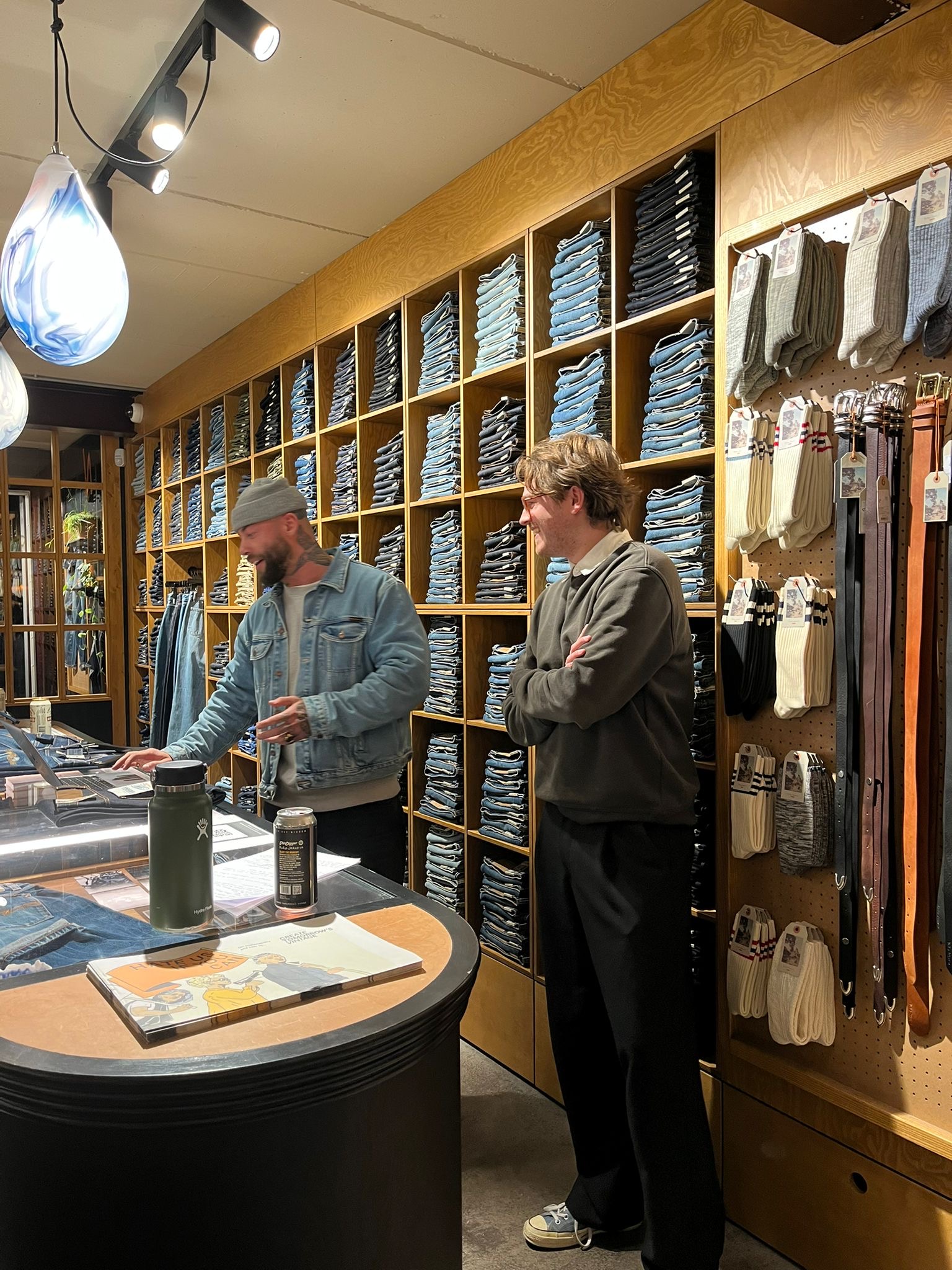
Gareth: Right now, we’re expanding our physical presence in the region with Manchester first and a couple more very exciting openings lined up for the next 6 months. These aren’t just retail spaces - they’re community hubs where people can repair, reuse, and reconnect with their clothes. We’re inviting local artists, musicians, and sustainability advocates to collaborate with us. If you’re someone who believes in slow fashion, circular design, or just loves good denim, we’d love to hear from you. Come by, bring your jeans, and let’s build something lasting together.
Q: What is the decision in coming to Manchester? What sold it for you, and how has the brand settled in?
Gareth: Manchester felt like a natural extension of Nudie’s spirit. It’s a city with grit, creativity, and a rich history of rebellion. But more than that, it reminds us of Gothenburg, where Nudie was born. Both are industrial cities with strong working-class roots, vibrant music scenes (although I think Manchester might just shade that one...), and a culture of doing things differently. That shared DNA made the decision easy. We’ve settled into the Northern Quarter, surrounded by independent thinkers and makers, and the reception has been incredible. People here understand the value of things that last and stories that matter.
Q: Ok, magic wand time; if we could grant you three wishes for the fashion industry, what would they be?
Gareth:
- Transparency. Every brand should show where, how, and by whom their clothes are made.
- Circularity as Standard. Repair, reuse, and recycle shouldn’t be niche - it should be the norm.
- Value over Consumption. Let’s move away from fast fashion and back to garments that carry meaning.
Q: Favourite pair of Nudie Jeans and why? What makes them so special? Do you have a personal pair that you could photograph and share with us?
Gareth: My favourite pair is my Tuff Tony Ten Pin Selvage. I’ve worn them for over three years - through store openings, long-haul trips, and countless visits to our Gothenburg HQ. They’ve become a part of my journey, with every crease and fade telling a story. What makes them special isn’t just the fit or the fabric - it’s the memories stitched into them. It’s a pair that tells a story better than I ever could.
Q: Finally - We’d love some recommendations; one climate-related resource, one person to follow online and one consumer brand that’s killing it!
Gareth:
- Climate Resource: GOTS – Global Organic Textile Standard – We’re proud to be GOTS certified, and our collaboration with them is a cornerstone of our commitment to sustainable production. GOTS ensures that every step of the textile process - from organic farming to responsible manufacturing - is done with environmental and social integrity.
- Person to Follow: Professor Andrew Groves – A leading voice in fashion education and sustainability. His ability to convey the historical significance of garments adds depth and value to them, encouraging his followers to respect clothing not just as product, but as cultural artefact.
- Consumer Brand: Patagonia – They walk the talk. From activism to product design, they’ve shown what it means to build a brand with purpose.


When textiles stay in circulation, communities thrive and businesses discover new value. This is where real sustainability begins.
Every little helps.
Find answers to common questions about circular fashion and textile systems.
Circular fashion is a system where textiles stay in use as long as possible through repair, resale, remanufacturing, and recycling. Instead of the linear model of make-buy-dispose, garments move through multiple lives and purposes before eventually becoming something else entirely.
Begin by mapping what already exists in your community or organisation. Understand who's repairing, collecting, and designing for longevity. Then identify one small intervention you can make and measure what happens. Start small, learn quickly, and expand from there.
Circular systems depend on coordination between communities, businesses, and institutions. No single organisation can build this alone. When these groups work together, they can identify gaps, share resources, and create infrastructure that actually works.
Communities are essential because circular systems only work if people understand why they matter and choose to participate. A repair workshop needs customers. A swap shop needs participants. Building genuine engagement takes time and listening, not marketing.
Policy can create incentives for circular approaches through extended producer responsibility, right-to-repair legislation, and investment in repair infrastructure. The most effective policies are designed with input from communities, businesses, and the people actually doing the work.
READY TO BUILD
CIRCULAR FASHION?
Explore our services or request
a conversation about collaboration.